


Dunacapella, a village behind the dunes (1135 to 1900)
For centuries Oostduinkerke was a quiet farming village, hidden behind a wide belt of dunes.
- Dunacapella (1135): in 1135 the village, then still called Dunacapella or dune chapel, first became an independent parish.
- Ostdunckercka (1246): the name became Dunckercka, and from 1246 people spoke of Ostdunckercka, to distinguish the village from Dunkirk in France.
- An island in the Middle Ages: in the Middle Ages a kind of tidal island stretched here from Dunkirk to Oostduinkerke, with the Dunes Abbey in the middle.
- Twenty small farms (1777): on the Ferraris maps of 1777 the village consists of the church, a few houses and some twenty small farms; there was still nothing in the dunes.
- The steam tram (1886): in 1886 the steam tram between Ostend and Veurne started running, the first public transport for Oostduinkerke village.
The shrimp fishers on horseback
Oostduinkerke is the only place in the world where shrimp are still caught on horseback.
- Fishing for a living: until the middle of the 20th century the horseback fishermen caught shrimp along the beach to make a living.
- Folklore: today horseback fishing is above all a living tradition, kept up with support from the municipality as a tourist attraction.
- Kruiers: alongside them, the kruiers or kruwers still catch shrimp with a trawl net they pull through the water themselves.
- UNESCO (2013): after recognition as Flemish heritage, the horseback fishermen were inscribed on UNESCO's list of intangible cultural heritage in December 2013.
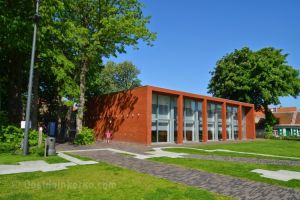
- Folklore evenings: in summer, craftspeople show old crafts such as lace making and basket weaving on Friday evenings in the museum courtyard.

The rise of Oostduinkerke-Bad (1899 to 1939)
At the start of the 20th century a new seaside resort rose by the sea, separate from the old village.
- Building land in the dunes (1899): in 1899 wealthy people from Bruges founded the Société civile des dunes d'Oostduinkerke et Coxyde, which prepared the dunes for building.
- The first hotels: the resort began with two hotels, of which Hotel Gauquié survived the longest.
- Artists and sand yachts: tourism really took off after the First World War; the writer Felix Timmermans holidayed here, artists met at the Hotel des Dunes, and sporty visitors came for the international sand yacht race.
- The Coastal Tram (1926): in 1926 the coastal tram reached Oostduinkerke-Bad, electric from 1929, and that line still runs as the Coastal Tram.
- Louis Artan: in the municipal cemetery stands the gravestone of the painter Louis Artan, designed by Victor Horta.
War, reconstruction and merger
The Second World War also left deep scars in Oostduinkerke, after which the village got a modern church and a new place within Koksijde.
- May 1940: during the Battle of Dunkirk in 1940 British soldiers fell here; they rest in the British military cemetery of Oostduinkerke.
- The old church destroyed: the old church of Oostduinkerke was destroyed in 1940, and in 1941 the occupiers abolished most tram lines.
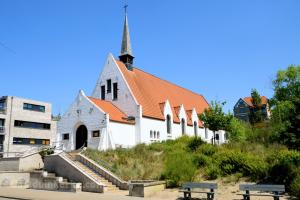
- Sint-Niklaaskerk (1952 to 1956): architect Jean Gilson built the modern brick Sint-Niklaaskerk, with a 36 metre tower and a 13.5 metre terracotta figure of Christ by Josef Arnost Gause.
- Nieuwpoort-Bad (1949): in 1949 Nieuwpoort-Bad, which lay on the territory of Oostduinkerke, passed to Nieuwpoort.
- Merger (1971 and 1977): in 1971 Oostduinkerke merged with Wulpen, and in 1977 both became part of the municipality of Koksijde.

Dunes and nature around Oostduinkerke
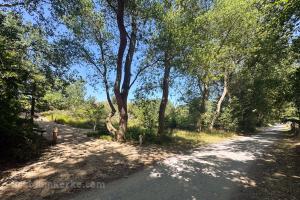
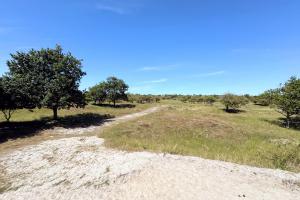
The dunes on both sides of the Leopold II-laan, which links the village with the resort, are now protected nature.
- Natura 2000: all the dune areas of Oostduinkerke are protected at European level as part of the Natura 2000 area of the coastal dunes.


